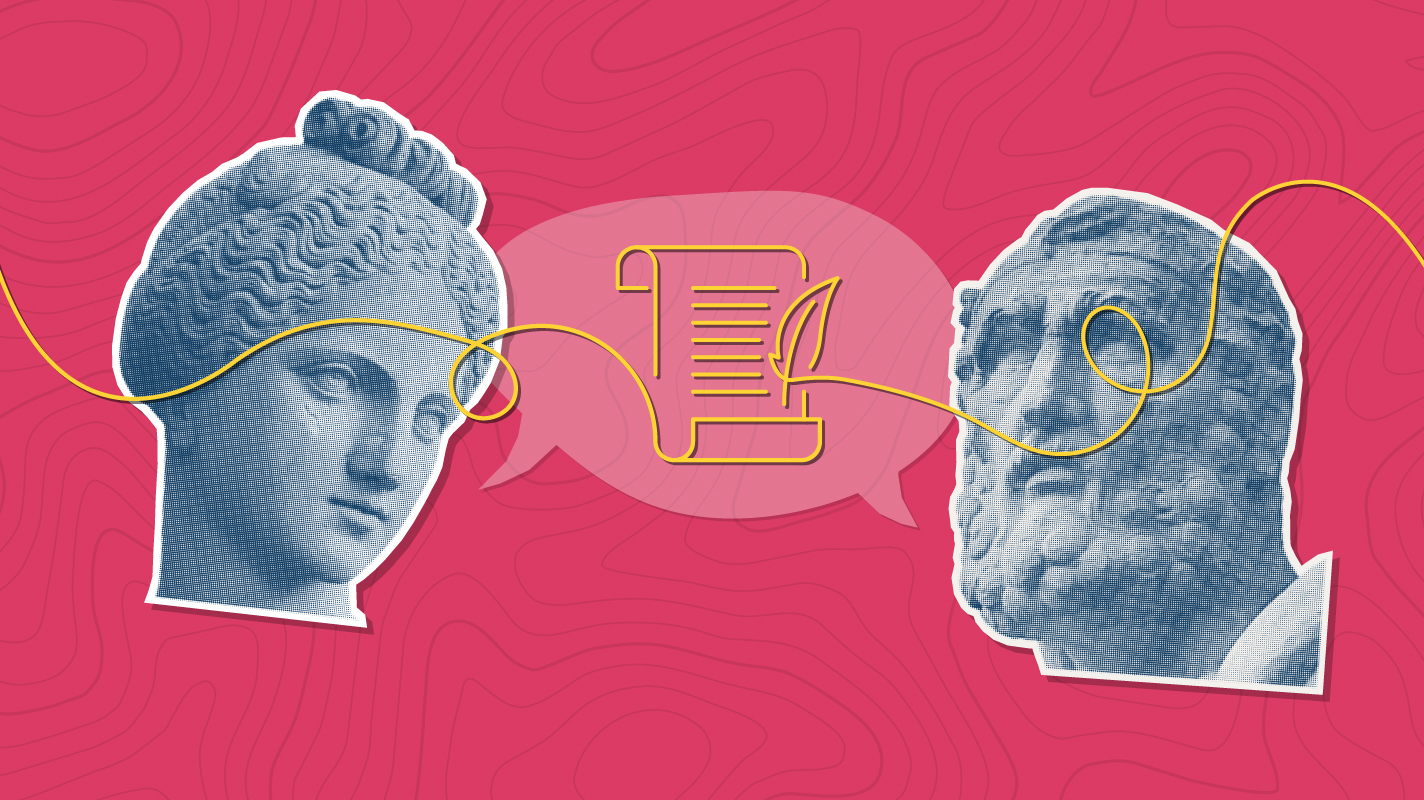

History always repeats itself, whether we like it or not. Each era is defined by a significant disruption. Creative and scientific thinkers begin to question long-held beliefs, institutions are challenged, societies shift, and new technologies quietly—or not so quietly—change our everyday lives.
It’s then that innovation surges, art flourishes, and culture is rewritten. It begs the question: are we describing the 14th-century resistance or the present day? The pendulum has officially swung back around! And we’ve entered the digital marketing Renaissance.
The End of Marketing’s Dark Ages
The past decade of marketing has been about everything at scale and in excess. Building everything bigger, better, and making sure there’s more of it. More email workflows. More paid ads. More automation. More dashboards. On and on we go.
Performance marketing held the power, cold, hard data drove decisions, and efficiency was the goal. And for a while, that worked well! Technology allowed brands and their marketing teams to scale faster than ever before. But here’s the thing about abundance: when everything becomes scalable, everything also becomes replaceable.

AI is Everywhere. Is it Innovation or Overload?
In this blog, learn more about when to use AI as a tool and why human connection still matters in a tech-driven world.
The Wall Street Journal reports that companies are now desperately seeking storytellers. Not more automation experts. Not more ad growth gurus. Storytellers. It’s because the thing that we’ve all been desperately missing is meaning and feeling.
The Search for Storytelling in Marketing
If the Renaissance had cathedral ceilings and commissioned paintings, we have the Super Bowl. Once a year, brands spend millions of dollars for 30 seconds of cultural relevance. The divide between those embracing the rush of the Renaissance and those stuck in the Dark Ages was stark this year.
Storytelling in the Super Bowl: The Good, the Bad, and the Ugly
The Good
The ads that worked well didn’t need to be the loudest. They were the most human. And they may or may not have had us personally tearing up while sitting on our couches staring at the TV…
This commercial was even directed by an Oscar-winning storyteller—Taika Waititi. It didn’t rely on flashy gimmicks or viral chaos. It focused on farmers. On their legacy. On real people connected to the land.
Rocket and Redfin – “America Needs Neighbors Like You”
They didn’t sell square footage or interest rates. They sold belonging and identity. The emotional weight of finding a place that feels like yours. Great storytelling marketing doesn’t sell the product, it sells the life you hope to have.
The Bad
Not every Super Bowl ad this year embraced the Renaissance spirit. Some leaned heavily on attention, but forgot about intention.
Nostalgia is powerful, and the Backstreet Boys are instantly recognizable. But celebrity callbacks aren’t a substitute for narrative. It gave us a moment of connection with everyone else in the room as we sang to (arguably) one of the greatest pop songs of all time, but we left feeling more connected to the band than the brand.
Good storytelling requires connection. Watching Chris Hemsworth navigate around a multi-million-dollar smart mansion is fun, but you’ve created a huge gap between brand and audience. Relatability? Out the window. Emotional stakes? Nonexistent.
The Ugly
What’s worse than lacking a good story? Lacking a good story and being tone-deaf to the times.
SVEDKA – “Shake Your Bots Off”
This Super Bowl ad slot was the first to be created primarily by artificial intelligence. Yes, humans were involved in its creation, but they were playing as the supporting cast to the robots, both literally in the ad and metaphorically. Just because it’s “one of a kind” doesn’t make it meaningful.
Genspark – “Take the Monday After the Super Bowl Off”
Messaging about taking a carefree day off might have landed differently in another moment. But timing is part of storytelling. When we all wake up each morning to a new headline about another mass layoff due to the AI revolution, this joke doesn’t feel as funny.
How to Thrive in the Digital Marketing Renaissance
If this truly is a renaissance, then marketers must become modern-day polymaths. The experts at blending creativity, psychology, data, and culture. Here’s how:
Immerse Yourself in Art
- Go to the movies and pay attention to pacing.
- See live theater and notice how tension builds.
- Listen to music and feel how emotion rises and falls.
Marketers who only consume marketing inevitably sound only like marketing.
Connect with People and Places Outside of the Algorithm
- Travel to new places to notice how different communities communicate, what they value, and what they don’t.
- Volunteer to put yourself in environments where the goal isn’t conversion or optimization, but contribution.
- Talk to people outside your industry to learn from others who are experts in their fields.
Algorithms show you what you already like. Experience shows you what you didn’t know you were missing.
Read Anything and Everything (And No, Not Just More Marketing Newsletters)
- Read fiction to understand different types of characters.
- Read history to understand context and stakes.
- Read memoirs to understand vulnerability and the inner voice.
Read anything that pulls you into someone else’s world. Every book you read is training in empathy.
The Rebirth of Digital Marketing Solutions
The original Renaissance was the rediscovering of art, literature, culture, and philosophy all through a human-centered lens. That’s exactly what this new era of digital marketing is all about. We’ve spent a decade building systems and workflows, now it’s time to build stories.
If you’re ready to root your marketing in craft, perspective, and human connection, let’s talk about digital marketing solutions that prioritize story first.